Two Tow Trucks, Two Very Different Jobs
A delivery van breaks down on I-95. A box truck loses a wheel bearing outside a warehouse. A semi-truck develops transmission trouble halfway through its route. All three need assistance, but sending the wrong type of tow truck can complicate the job. For Jessup flatbed towing, choosing between a flatbed and a heavy-duty wrecker depends on the vehicle’s weight, condition, and configuration.
Both trucks move disabled vehicles, but they do it differently. A flatbed carries the entire vehicle on its deck. A wrecker typically lifts one end, leaving certain wheels on the road, and can also handle demanding recovery work.
When a Flatbed Makes Sense
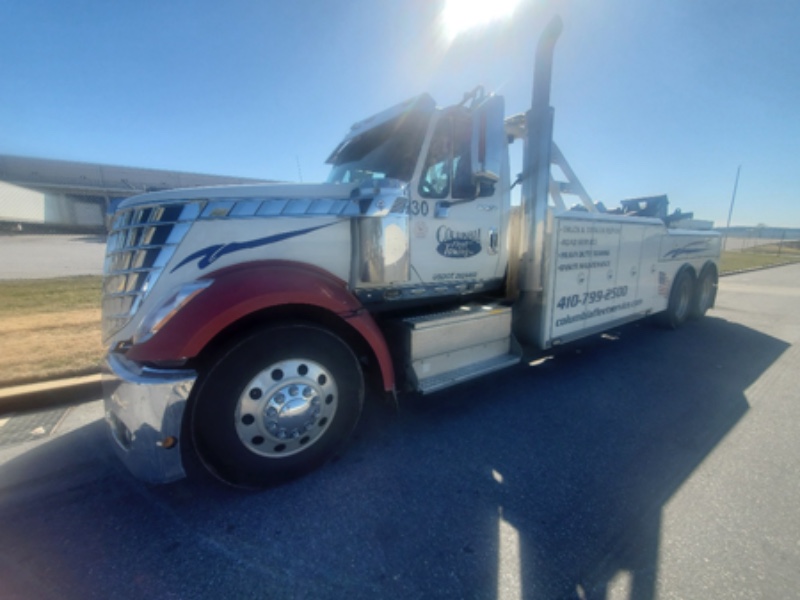
Flatbed towing is often preferred when a vehicle shouldn’t roll on its own wheels. The operator tilts the bed, loads the vehicle using suitable equipment, and secures it for transportation.
For commercial fleets, flatbeds are useful when moving work vans, pickup trucks, smaller commercial vehicles, and certain types of equipment. They can also transport vehicles between facilities without adding mileage.
What If the Vehicle Has Damaged Wheels?
A vehicle with broken suspension, damaged steering, or a drivetrain problem may be unsuitable for conventional towing. Keeping its wheels off the pavement can prevent further damage during transport. Flatbeds are also commonly used for commercial electric vehicles and all-wheel-drive vehicles when manufacturer instructions require full-wheel transport. The truck’s payload capacity and loading dimensions still have to accommodate the vehicle.
When a Heavy Wrecker Takes Over
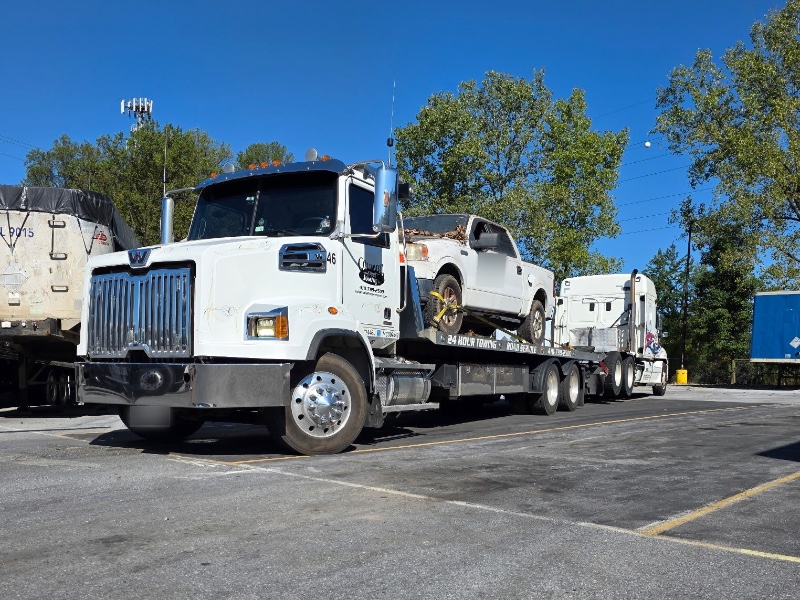
Heavy-duty wreckers are built for larger commercial vehicles, including semi-trucks, buses, and substantial work trucks. Their lifting systems can support one end of a disabled truck while the other axle or axles remain on the roadway.
The operator must consider the truck’s drivetrain, axle configuration, and weight before towing. Some vehicles require a driveshaft to be disconnected or axle shafts removed to prevent transmission damage.
A wrecker can also help when a truck has left the roadway or needs to be repositioned before transport. Severe accidents and rollovers may require additional recovery equipment, such as a rotator.
What Dispatch Needs to Know
For flatbed towing in Jessup, knowing the vehicle’s make and model is a starting point. The details of the breakdown often determine which truck should respond.
Before calling, gather the following information:
- Vehicle weight: Include its cargo or load status.
- Mechanical condition: Can it roll, steer, and brake normally?
- Damage: Are any wheels, axles, or suspension components affected?
- Location: Is the vehicle on a highway shoulder, in a yard, or at a construction site?
- Destination: Where does the vehicle need to be transported?
These details help determine whether Jessup flatbed transport is suitable or whether a heavy wrecker is required.
Sometimes the Answer Is Neither
A disabled truck doesn’t always need a tow. If the problem involves a battery, air line, or another repairable component, a mobile technician may be able to resolve it where the truck stopped.
A request for Jessup flatbed towing may therefore begin with a discussion about the actual breakdown. A minor mechanical issue could be resolved without transporting the entire truck to a workshop. For flatbed service, access to roadside repair and recovery equipment gives dispatchers more options when deciding what assistance to send.
Columbia Fleet Service: Jessup Flatbed Towing and Recovery
Since 1991, we’ve supported commercial fleets throughout Central Maryland. Our operation has grown from one road service truck and a pickup into a full-service fleet repair, towing, and recovery company.
Our equipment includes light- and heavy-duty flatbeds, heavy wreckers, a 40-ton rotator, and a Landoll trailer. We also operate mobile service trucks and a repair facility in Jessup, allowing us to handle roadside problems and workshop repairs.
For flatbed towing for Jessup fleets, the right equipment depends on the vehicle and the reason it needs transporting. Tell us what you’re driving and what went wrong. We’ll help determine whether a flatbed, heavy wrecker, or roadside repair is the appropriate option.
FAQs
Is flatbed towing better for all-wheel-drive vehicles?
Often, yes. Many manufacturers require all four wheels to remain off the ground during towing. Always follow the vehicle’s towing instructions.
Can a flatbed tow a semi-truck?
Most conventional flatbeds cannot accommodate a full-sized semi-truck. Heavy-duty wreckers and other commercial transport equipment are generally more suitable.
What is an underlift on a tow truck?
An underlift is a lifting system that supports a vehicle by its axle or another approved structural point during towing.
Can a wrecker tow a truck with transmission damage?
Yes, provided the operator follows the appropriate drivetrain-disconnection or towing procedures to prevent further damage.
Do loaded commercial trucks need different towing equipment?
The additional weight affects towing capacity and equipment selection. Dispatch needs to know the vehicle’s approximate loaded weight.
Can mobile repair eliminate the need for towing?
Yes. Some electrical, mechanical, and roadside problems can be repaired on-site, depending on their severity and the working conditions.